
Technical debt is often misunderstood.
Many people assume it simply means old code.
It doesn’t.
A system can contain years-old code and still be easy to change. At the same time, a feature written only a few months ago can already create technical debt if it makes future work more difficult.
Technical debt is best measured by one question:
How difficult has it become to make a simple change?
Small Decisions Become Long-Term Costs
Technical debt rarely appears overnight.
It grows gradually.
A shortcut to meet a deadline.
A temporary workaround.
A cleanup task postponed until “later.”
Each decision seems reasonable on its own.
The problem is that these decisions accumulate.
Eventually, what was once a simple system becomes increasingly difficult to change.
The Cost Is Hidden
Most companies don’t see technical debt on a financial report.
Instead, they experience its effects.
Releases take longer.
Simple requests require more engineering effort.
Testing becomes more complex.
Unexpected issues appear more frequently.
Engineers spend more time understanding the system than improving it.
The business feels the impact, even if it never uses the phrase “technical debt.”
Why Hiring More Engineers Doesn’t Solve It
A common reaction is to expand the engineering team.
Unfortunately, more people cannot remove unnecessary complexity.
If the underlying system is difficult to change, additional engineers simply spend more time navigating the same obstacles.
The complexity remains.
The cost continues to grow.
What Healthy SaaS Companies Do Differently
High-performing SaaS companies treat technical debt as an operational concern, not just an engineering concern.
They regularly reduce unnecessary complexity.
They simplify architecture where possible.
They remove friction before it slows delivery.
Most importantly, they recognize that every future release depends on how easy today’s system is to change.
Final Thought
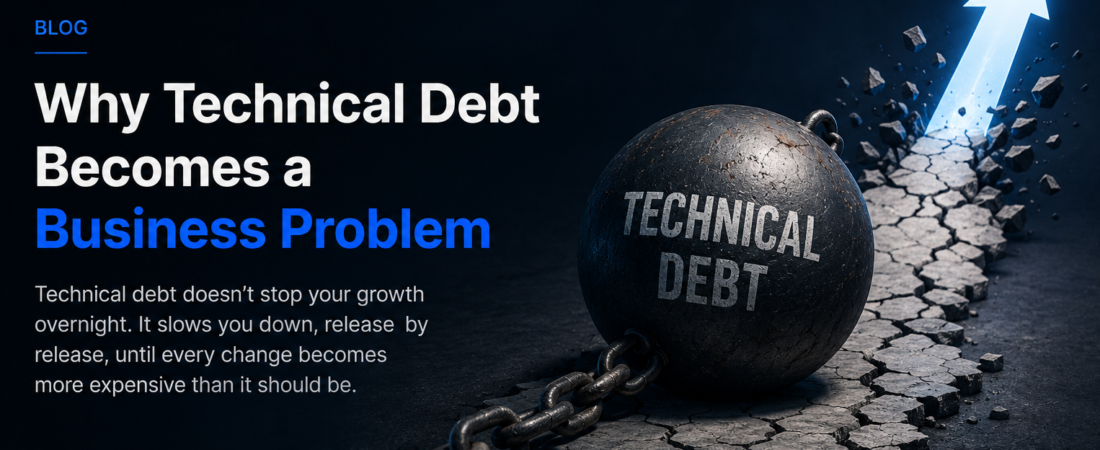
Technical debt does not stop a company in a single day.
It slows progress gradually.
Every release becomes more expensive.
Every improvement requires more effort.
Every future change takes longer than it should.
The companies that continue to grow successfully are not necessarily the ones with the most engineers.
They are the ones that continuously reduce the friction that prevents their systems from evolving.
Because technical debt is not simply about code.
It is about protecting the company’s ability to move forward.
Altiprime helps SaaS companies identify and resolve operational, architectural, and scalability bottlenecks before they become growth constraints.
Neil Altawil | Founder & CEO, Altiprime
LinkedIn:https://linkedin.com/in/neil-altawil